Tree Tips
By ArbolPro Arborists
- Tree Trimming · Hurricane Prep · Palm Beach County
When to Trim Your Trees Before Hurricane Season in South Florida
When to trim trees before hurricane season South Florida homeowners ask every year is one of the most important decisions for protecting homes, families, and valuable trees from hurricane damage. This guide explains the ideal timing, best pruning practices, and common mistakes to avoid.
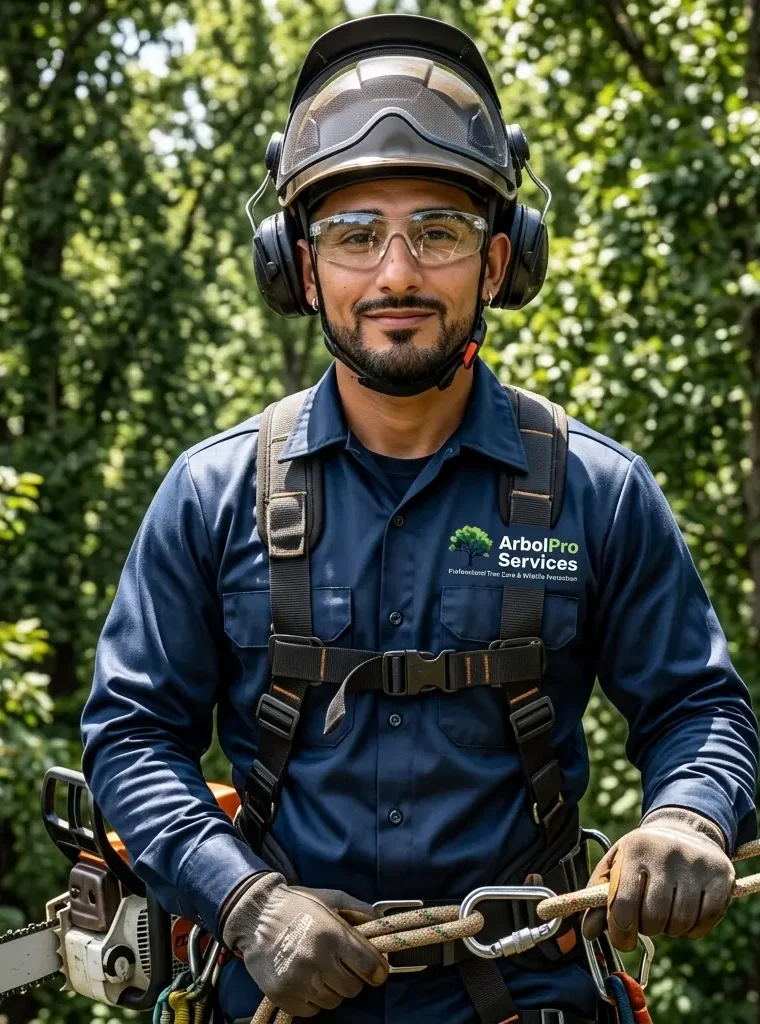
By ArbolPro Services ISA-Certified Arborists · Palm Beach County, FL · Updated for the 2025 Hurricane Season
A practical guide to pre-season tree trimming — when to do it, what to cut, what to leave alone, and what most homeowners get wrong.
- ISA-Certified · Licensed & Insured · West Palm Beach
When to Trim Trees Before Hurricane Season South Florida
In Palm Beach County, hurricane season doesn’t give you much warning. It starts June 1 — and by late May, most reputable tree service companies are already fully booked with homeowners who planned ahead.
The best time to trim your trees before hurricane season is between March and May. That window gives your trees time to recover from trimming cuts before the stress of summer heat and the first named storm. It also puts you ahead of the scheduling rush that hits every spring without fail.
This guide covers exactly why that timing matters, what kind of trimming actually reduces storm risk, what most homeowners get wrong, and what our ISA-certified arborists recommend for properties across Palm Beach County — from Wellington to Boca Raton.
- Best trimming window: March–May
- The hurricane cut — what it is and why it harms palms
- What to trim vs. what to leave alone
- Post-storm tree assessment
- Costs and when to call a professional
Why the Timing of Pre-Hurricane Trimming Matters
Trimming a tree isn’t just cosmetic. When you remove branches, you create wounds in the tree’s tissue. The tree needs time to compartmentalize those wounds — a biological process where the tree forms a barrier to protect healthy tissue from decay.
In South Florida’s climate, that compartmentalization process takes roughly 4–8 weeks depending on species and the size of the cuts. If you trim in late May or early June, just as a tropical system moves in, you’re sending a stressed tree into the worst possible conditions.
Trimming in March or April gives the tree time to:
- Begin wound compartmentalization before summer heat peaks
- Stabilize its root-to-canopy ratio after crown reduction
- Show signs of underlying problems that a second look can catch before storm season
There’s also a practical reason: April is when demand spikes. Homeowners across Palm Beach County — from Palm Beach Gardens to Boynton Beach — start calling in mid-April. If you wait until then, you may be waiting weeks for an appointment or settling for whoever is still available.
What Kind of Trimming Actually Reduces Storm Damage Risk
Not all trimming reduces storm risk. Some of it makes things worse.
The most important type of pre-hurricane pruning is structural pruning — removing dead branches, crossing branches, and heavy end-weight from long lateral limbs. These are the branches most likely to fail in high wind, and removing them reduces the load the tree has to manage during a storm.
Crown reduction — reducing the overall height and spread of the canopy — is appropriate for some trees, particularly those that have grown asymmetrically or that overhang your roof line. Done correctly, it follows ANSI A300 standards and involves cutting back to lateral branches that can sustain the new growth direction. Done incorrectly — topping — it creates decay entry points and weak regrowth that fails faster in a storm than the original branch would have.
What does not help: removing too much green material. Trees need their canopy to photosynthesize and to maintain the root-to-crown ratio that keeps them stable. A tree that has been over-trimmed — stripped of more than 25% of its live canopy — is often structurally weaker after trimming than before it.
Our arborists evaluate each tree individually. The goal isn’t to make the tree as small as possible. The goal is to remove what would fail and keep what keeps the tree standing.
The Hurricane Cut Myth — Why It Makes Your Palms More Vulnerable
One of the most common mistakes we see on properties across Palm Beach County — especially in communities like Wellington, Jupiter, and Delray Beach — is what the industry calls the “hurricane cut.”
A hurricane cut means stripping all green fronds off a palm until only a bare trunk remains with a small tuft at the top. Homeowners believe this reduces wind resistance. It doesn’t.
Here’s what it actually does:
- Removes the fronds that protect the apical bud — the only growing point a palm has. If that bud is damaged, the palm dies.
- Forces the tree to redirect all its energy into frond regrowth rather than root and structural maintenance
- Creates a stressed tree going into the exact conditions that require the most structural integrity
The correct approach is to remove fronds below the 9 o’clock to 3 o’clock horizontal position, plus fruit stalks and dead material. That’s it. Green fronds above that line stay on the tree.
If a company recommends a hurricane cut for your palms, that’s a signal to get a second opinion. See our guide to the right way to trim a palm tree in South Florida for the full breakdown.
What to Trim and What to Leave Alone Before Hurricane Season
When our crews assess a property before storm season, here’s the framework we use:
Remove without question:
- Dead branches in the canopy — these fail without wind
- Branches with visible cracks, splits, or fungal growth at the attachment point
- Branches with narrow V-shaped crotches (weak attachment angle)
- Branches overhanging the roof, pool cage, or vehicles
- Co-dominant stems competing for dominance — both weaken over time
Evaluate case by case:
- Large lateral limbs with heavy end-weight — may need selective thinning or end-weight reduction
- Canopy density — sometimes crown thinning reduces wind load without full crown reduction
- Trees with a lean toward structures — the lean’s origin matters (root issue vs. growth pattern)
Leave alone:
- Green, healthy branches throughout the canopy
- Palm fronds above the 9–3 horizontal line
- Recent growth on younger trees — removing it stresses the tree
The amount removed in a single session should generally not exceed 25% of the live canopy. More than that, and the tree spends the season in recovery rather than stability.
Pre-Season Trimming Fills Up Fast Across Palm Beach County
What to Do With Trees After a Storm — Before You Call Anyone
Pre-hurricane trimming is preparation. But what happens after a storm matters just as much.
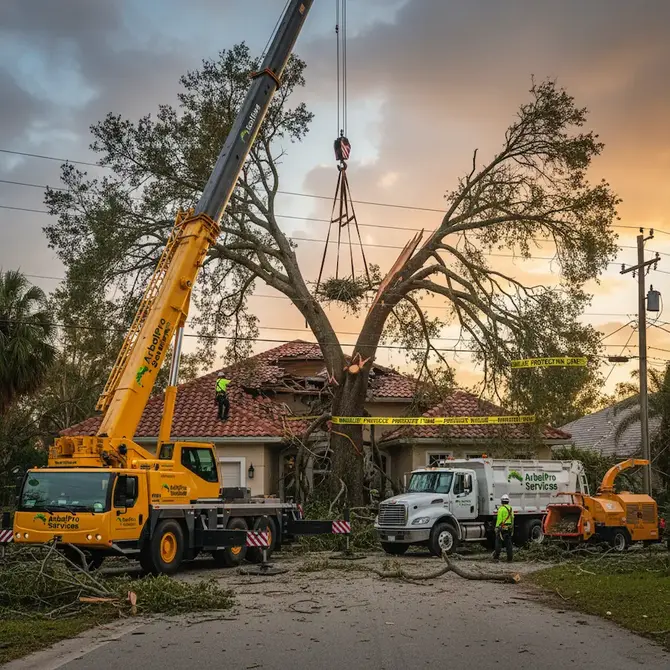
After a named storm moves through Palm Beach County, many trees look damaged when they’re actually fine — and some trees look intact when they have serious structural compromise that isn’t visible from the ground.
Give storm-damaged trees a few weeks before making removal decisions, when the situation allows. Trees that have lost leaves or smaller branches to wind often recover fully once the stress is over.
Do not wait to address:
- Trees that have shifted at the root ball — even slightly
- Trees with major trunk splits or cracks that weren’t there before
- Trees with the root system visibly lifting from the ground
- Any tree in contact with a structure, power line, or vehicle
For insurance claims: photograph the tree and damage before any work begins. Keep the written estimate and invoice from whoever does the removal. Most major Florida insurers require both to process a tree-related claim.
For emergency tree service after a storm in Palm Beach County, ArbolPro responds 24 hours a day at (728) 209-4532. See our emergency tree service page for more.
Pre-Hurricane Tree Trimming Across Palm Beach County
The trees — and the risk — vary depending on where you are in the county.
West Palm Beach properties typically have a mix of mature live oaks, slash pines, large ficus, and palms. Pre-season trimming here usually involves structural pruning on the hardwoods and a separate palm maintenance pass.
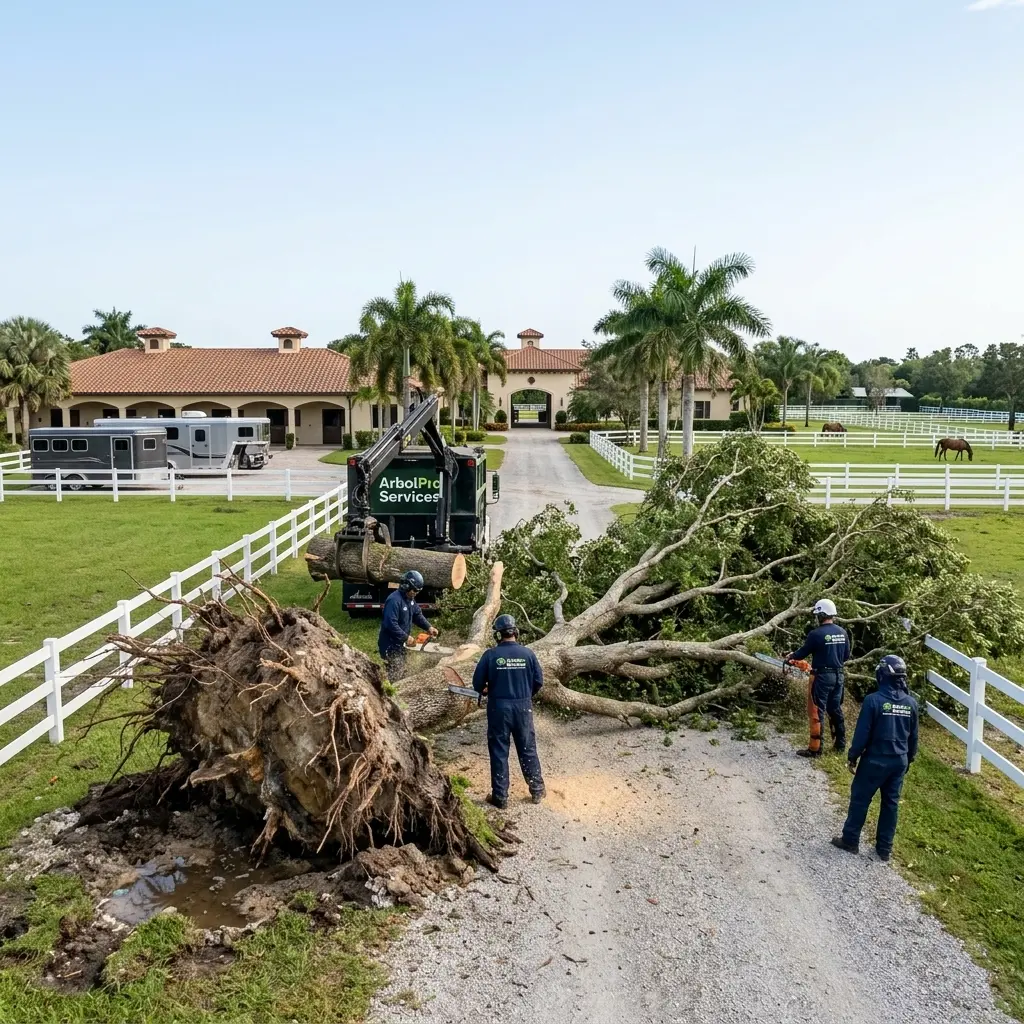
Wellington and Loxahatchee lots tend to be larger with more trees per property. Live oaks with wide canopy spreads are common — and those wide canopies need careful evaluation before each season.
Jupiter and Palm Beach Gardens — especially waterfront and coastal properties — face higher wind exposure than inland communities. We generally recommend lower canopy density and more thorough dead-wood removal for these properties.
Boca Raton, Delray Beach, and Boynton Beach frequently have mature canopies that have grown significantly since the last major storm. If it’s been more than two seasons since a full structural assessment, pre-season is the right time.
Pompano Beach properties near the coast face similar conditions to Jupiter — multi-directional wind exposure and salt air stress that affects tree health over time.
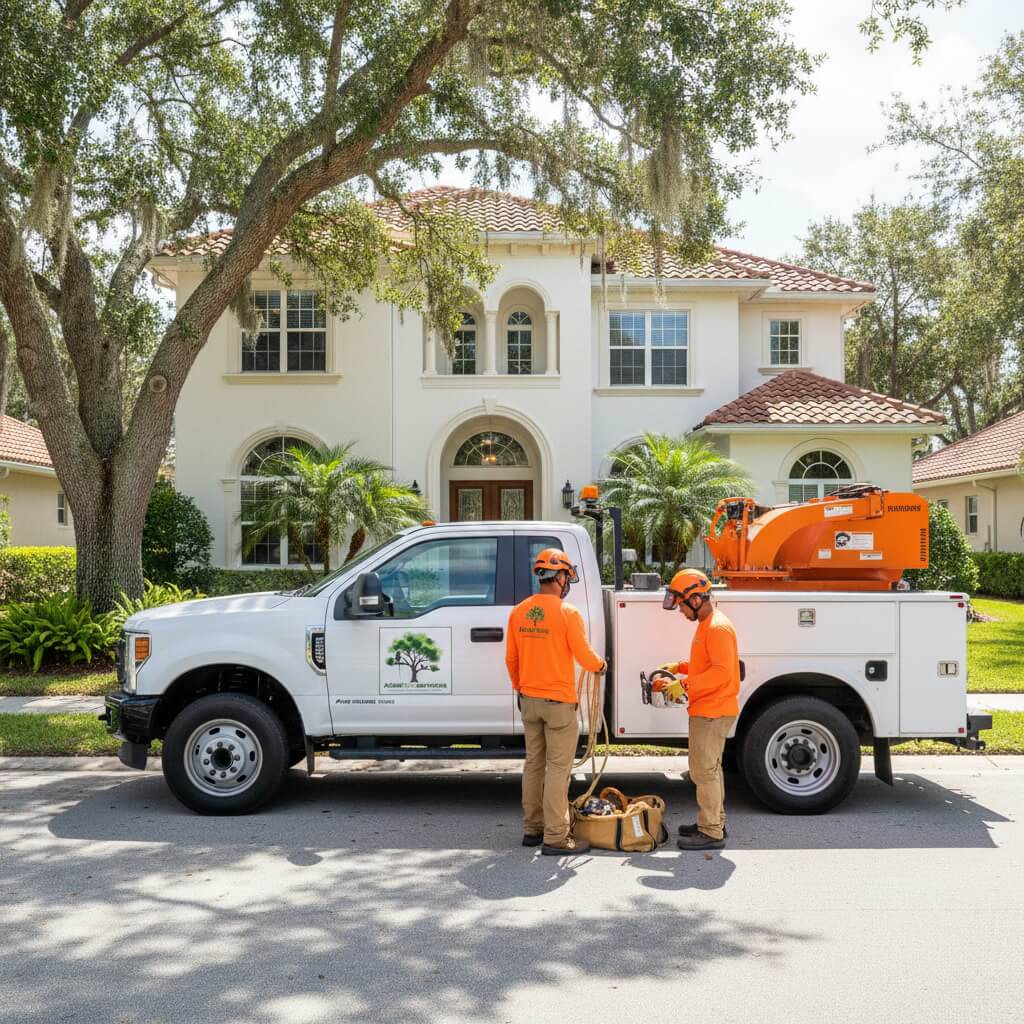
We serve all of these communities. Scheduling in March and April gives us more flexibility to work around your schedule rather than ours.
- Pricing Guide
What Pre-Season Tree Trimming Costs in Palm Beach County
Tree trimming costs vary significantly depending on several factors, including tree species, height, canopy size, accessibility, proximity to structures, equipment requirements, and the overall scope of work.
For example, trimming a small ornamental tree is very different from performing structural pruning on a mature oak tree over a home, pool enclosure, or power lines.
When evaluating a property, our arborists consider:
- Tree species and condition
- Height and canopy spread
- Number of trees involved
- Access for equipment and crews
- Proximity to homes, vehicles, fences, or utilities
- Cleanup and debris removal requirements
Because every property is different, the most accurate way to determine pricing is through an on-site evaluation.
At ArbolPro Services, all estimates are provided free of charge, on-site, and in writing before any work begins. You’ll receive a clear scope of work, professional recommendations, and transparent pricing with no surprises.
If you’re preparing your property for hurricane season, schedule a free assessment and we’ll help identify any trees that may require pruning before severe weather arrives.
- Multi-tree discount available — ask when you call
- Palm and hardwood trimming combinable in one visit
- Written quote before any work begins — no surprises
When to Call a Professional — And What to Ask
Not every tree concern requires a professional. But some things shouldn’t be evaluated without a trained eye.
Call an ISA-certified arborist before hurricane season if:
- You have a tree over 20 feet that hasn’t been assessed in two or more years
- You’ve noticed a change in a tree’s lean, root condition, or crown shape
- A previous storm left damage you weren’t sure how to interpret
- You have a tree near your roof, pool cage, vehicle, or property line
- You’re not sure whether a prior trim was done correctly
When you call, ask for an ISA-certified arborist to conduct the assessment — not just a crew estimate. Certification matters for structural risk evaluation. The International Society of Arboriculture maintains a searchable directory of certified arborists if you want to verify credentials before scheduling.
At ArbolPro Services, our ISA-certified arborists provide free on-site assessments across Palm Beach County. We’ll walk your property, identify what needs attention before the season, and give you a written quote before we schedule anything.
- Frequently Asked Questions
When to Trim Trees Before Hurricane Season — FAQ
Proper structural pruning reduces the likelihood of branch failure in high winds. It doesn’t make a tree storm-proof, but removing dead branches, correcting weak attachment points, and reducing canopy density meaningfully reduces the load a tree must manage during a storm.
Ideally 6–10 weeks before June 1, which puts the target window in March and April. This gives trees enough time to compartmentalize trimming wounds and stabilize before summer conditions arrive. Trimming in late May leaves trees stressed as they enter the highest-risk part of the season.
When is the best time to trim trees in Palm Beach County before hurricane season?
March through May is the ideal window. It gives trees 4–8 weeks to recover from trimming cuts before hurricane season begins on June 1. By mid-April, scheduling demand rises sharply — booking in March or early April gives you more flexibility and availability.
How much of a tree should you trim before a hurricane?
No more than 25% of the live canopy in a single session. More than that stresses the tree and can reduce its structural stability. The focus should be on removing dead wood, branches with weak attachment points, and heavy end-weight — not reducing the tree’s size as dramatically as possible.
Should you trim palm trees before a hurricane in South Florida?
Yes — but correctly. Remove fronds below the 9 o’clock to 3 o’clock horizontal position, fruit stalks, and dead material. Do not do a hurricane cut (stripping the palm to a bare trunk). This practice stresses the tree, damages the apical bud, and actually increases storm vulnerability.
Does trimming trees before a hurricane actually help?
Proper structural pruning reduces the likelihood of branch failure in high winds. It doesn’t make a tree storm-proof, but removing dead branches, correcting weak attachment points, and reducing canopy density meaningfully reduces the load a tree must manage during a storm.
How soon before hurricane season should trees be trimmed in Florida?
Ideally 6–10 weeks before June 1, which puts the target window in March and April. This gives trees enough time to compartmentalize trimming wounds and stabilize before summer conditions arrive. Trimming in late May leaves trees stressed as they enter the highest-risk part of the season.
The Bottom Line
The best time to trim your trees before hurricane season in Palm Beach County is between March and May — not when a storm is already approaching.
Pre-season trimming done correctly reduces branch failure risk, gives trees time to recover, and keeps your property off the scheduling backlog that hits every April. Done incorrectly — over-trimmed, hurricane-cut palms, topped hardwoods — it can leave trees more vulnerable than before.
If you’re in West Palm Beach, Boca Raton, Jupiter, Wellington, or anywhere in Palm Beach County, ArbolPro Services provides free on-site assessments from our ISA-certified arborists. We’ll tell you what actually needs to come off before the season — and what doesn’t.
- Get Started
Need a Free Quote in Palm Beach County?
Need a free quote in Palm Beach County? Contact ArbolPro Services today or call (728) 209-4532. We serve West Palm Beach, Boca Raton, Wellington, Jupiter, Palm Beach Gardens, Delray Beach, Boynton Beach, and Pompano Beach.
Free estimates Mon–Sat · Pre-season trim now available · ISA-Certified Arborists
✓ Licensed & Insured ✓ Written Quote ✓ No Subcontractors ✓ Palm Beach County