Tree Tips
Palm Trimming Guide
- Tree Tips · Palm Tree Care · Palm Beach County
The Right Way to Trim a Palm Tree in South Florida
By ArbolPro Services ISA-Certified Arborists · Palm Beach County, FL · Palm Care Guide
The 9–3 rule, what damages a palm, how often to trim, and what correct trimming looks like versus a harmful one.
- ISA-Certified · Licensed & Insured · West Palm Beach
Knowing how to trim a palm tree correctly is more important — and less intuitive — than most homeowners in South Florida realize. The most common trimming approach seen on Palm Beach County properties is also one of the most damaging: removing too much, too aggressively, under the assumption that less canopy means less storm risk.
It doesn’t. It means a stressed tree, a compromised growing point, and a palm that’s less resilient going into the conditions that will test it most.
This guide covers the correct technique for palm trimming in South Florida, the biology behind why over-trimming causes harm, how often palms actually need attention in Palm Beach County’s climate, and what a correct trim looks like compared to a damaging one — based on what our ISA-certified arborists see on properties from West Palm Beach to Boca Raton every week.
- The 9–3 rule — where to stop removing fronds
- What the hurricane cut is and why it harms palms
- How palm biology determines trimming decisions
- How often palms need trimming in Palm Beach County
- What correct palm trimming looks like versus a damaging one
The 9–3 Rule — The Foundation of Correct Palm Trimming
The most widely used standard among ISA-certified arborists for palm trimming is the 9–3 rule, sometimes called the clock position rule: imagine a clock face superimposed on the palm’s crown. Fronds that grow below the 9 o’clock position on the left and the 3 o’clock position on the right — below the horizontal line through the center — may be removed. Everything above that line stays on the tree.
That’s the whole rule. It sounds simple, and it is — but it’s consistently violated on properties across Palm Beach County by crews who remove far more than this standard allows.
In addition to position, there are specific categories of material that should be removed regardless of where they fall in the canopy:
- Dead fronds — fully brown and dry, hanging downward. These are no longer photosynthesizing and provide no value to the tree.
- Fruit stalks and seed clusters — the woody peduncles remaining after fruit has dropped, plus any active fruit clusters that pose a weight or projectile hazard.
- Boots — dried old frond bases that adhere to the trunk on some species (particularly Washingtonia palms). These can accumulate and harbor pests.
- Diseased or pest-damaged fronds — fronds showing signs of Ganoderma, Thielaviopsis trunk rot or active pest infestations should be removed regardless of canopy position.
What should never be removed: any green frond above the horizontal line. These fronds are actively photosynthesizing, storing nutrients (particularly potassium and magnesium that South Florida’s sandy soils leach quickly) and protecting the apical bud — the only growing point the palm has.
Palm Biology — Why the 9–3 Rule Exists
To understand why the 9–3 rule matters, you need to understand one fundamental fact about palms: a palm has exactly one growing point.
That point — the apical meristem — sits at the top of the trunk, inside the crown shaft (the smooth, tightly wrapped column of leaf bases visible at the top of most palm species). Every frond the palm will ever produce comes from this single location. If it’s damaged, the palm cannot produce new fronds. It will die — sometimes quickly, sometimes over 1–3 seasons, but it cannot recover.
The green fronds surrounding the crown shaft serve two critical functions beyond photosynthesis:
Nutrient storage. Palms translocate nutrients from older fronds to newer ones as part of their normal growth cycle. This is why yellow lower fronds don’t always indicate a sick tree — it’s often just the palm moving potassium and magnesium upward to newer tissue. Remove those fronds before the nutrients have been translocated and you accelerate deficiency in a tree that already struggles to get adequate nutrition from South Florida’s sandy soils.
Crown protection. The surrounding fronds buffer the apical bud from direct exposure to wind, rain, salt spray and temperature extremes. A palm whose upper fronds have been stripped loses that buffer at exactly the moments — tropical storms, cold snaps, salt-laden post-storm winds — when it needs it most.
This is why removing green fronds above the 9–3 line isn’t just aesthetically wrong — it compromises the tree’s ability to sustain itself and resist stress. The research from UF/IFAS on palm nutrition and care consistently supports this: over-trimmed palms show higher rates of nutritional deficiency, reduced growth and increased failure under wind stress.
The Hurricane Cut — Why the Most Common Pre-Storm Approach Backfires
The “hurricane cut” — stripping a palm of all fronds except a small tuft at the very top — is the single most common incorrect palm trimming practice we see on properties across Palm Beach County, from Jupiter to Pompano Beach.
The reasoning behind it seems intuitive: less canopy, less wind resistance, less storm risk. The problem is that palm fronds are flexible, not rigid. They move with the wind rather than catching it. The aerodynamic load on a correctly maintained palm’s canopy is not the risk factor. The structural integrity of the root system, the trunk and the crown shaft attachment are.
What the hurricane cut actually does:
- Removes the green fronds that protect the apical bud from direct exposure
- Depletes the tree’s stored nutrient reserves at exactly the wrong moment
- Forces the palm to redirect all available energy to emergency frond production, leaving nothing in reserve for root maintenance or structural stability
- Can, in some cases, damage the crown shaft itself during aggressive cutting near the top — at which point recovery is impossible
Post-storm surveys in South Florida have repeatedly shown that well-maintained palms with appropriate canopy outperform hurricane-cut palms under equivalent wind conditions. The canopy actually helps by distributing wind load across flexible fronds rather than concentrating it at the trunk.
The International Society of Arboriculture explicitly recommends against the hurricane cut. It violates ANSI A300 standards. And yet it persists — because it looks dramatic, it’s quick to execute, and it’s sold aggressively by non-certified crews before each storm season.
For more on this, see our full guide: The #1 Mistake Homeowners Make Before a Hurricane: The Hurricane Cut.
How to Trim a Palm Tree — What the Correct Process Looks Like Step by Step
A correct palm trimming job in Palm Beach County follows a consistent sequence. Here’s what it looks like from assessment to cleanup.
Step 1: Ground assessment before anyone climbs. An arborist evaluates the palm from the ground — crown shaft condition, trunk integrity, root zone, visible disease signs. This takes 5–10 minutes and determines what equipment is needed and what specifically should be removed. A crew that begins rigging without a ground assessment is skipping the most important part of the job.
Step 2: Fruit and stalk removal first. Coconuts, date clusters, Washingtonia seed spikes and other fruit should come down before frond trimming begins. Trimming fronds first can dislodge loose fruit that then becomes a falling hazard mid-job.
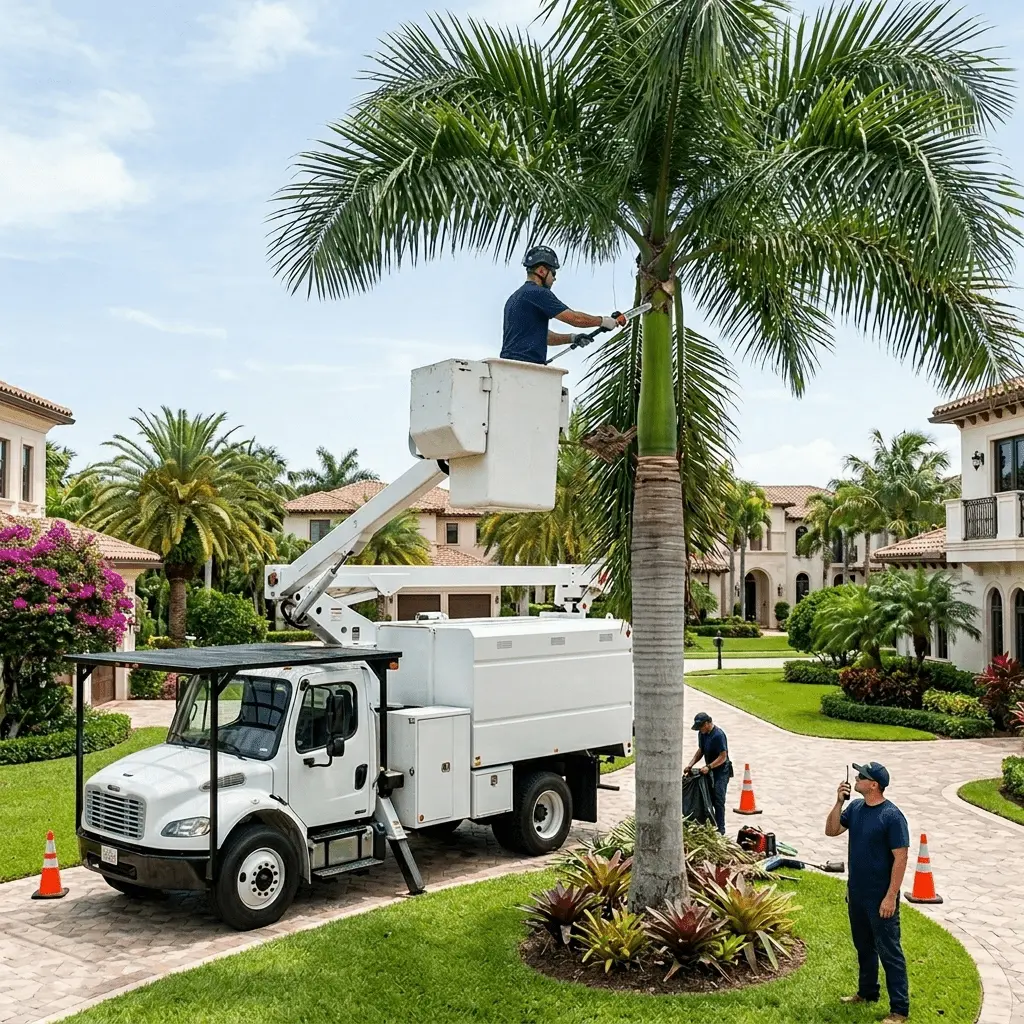
Step 3: Frond removal at the 9–3 line. Starting below the horizontal line, dead fronds are removed by cutting close to the trunk — not flush, but not leaving long stubs either. The cut should be made at the base of the petiole, leaving a smooth, clean stub that will dry and fall away naturally over time.
Step 4: Boot removal (species-dependent). On Washingtonia palms, accumulated dry frond bases (boots) can be peeled if they are fully dry and come away cleanly. Forcing off boots that are still attached damages the trunk beneath. If they resist, leave them.
Step 5: Full debris removal. All fronds, stalks, fruit and cut material leaves the property. On a correctly trimmed palm, the result should look maintained — not stripped. If the palm has fewer than 8–10 visible green fronds remaining after the work, too much was removed.
How Often Do Palms Need Trimming in Palm Beach County?
The honest answer: most palms in Palm Beach County need trimming once a year. Some species need less. Very few need more.
Sabal palms (Florida’s native state tree) are self-cleaning above the crown shaft and produce dead fronds slowly. An annual trim to remove accumulated dead lower fronds and any fruit stalks is typically sufficient.
Royal palms are almost entirely self-cleaning — the crown shaft drops fronds naturally. Professional service is mainly needed for cleanup of dropped material and occasional inspection. Over-trimming Royal palms is one of the most common unnecessary service calls we see across Palm Beach County.
Coconut palms benefit from annual fruit and frond management, with more frequent attention (every 6–9 months) if the palm carries heavy fruit loads in a location where falling coconuts pose a hazard — near driveways, pools or structures.
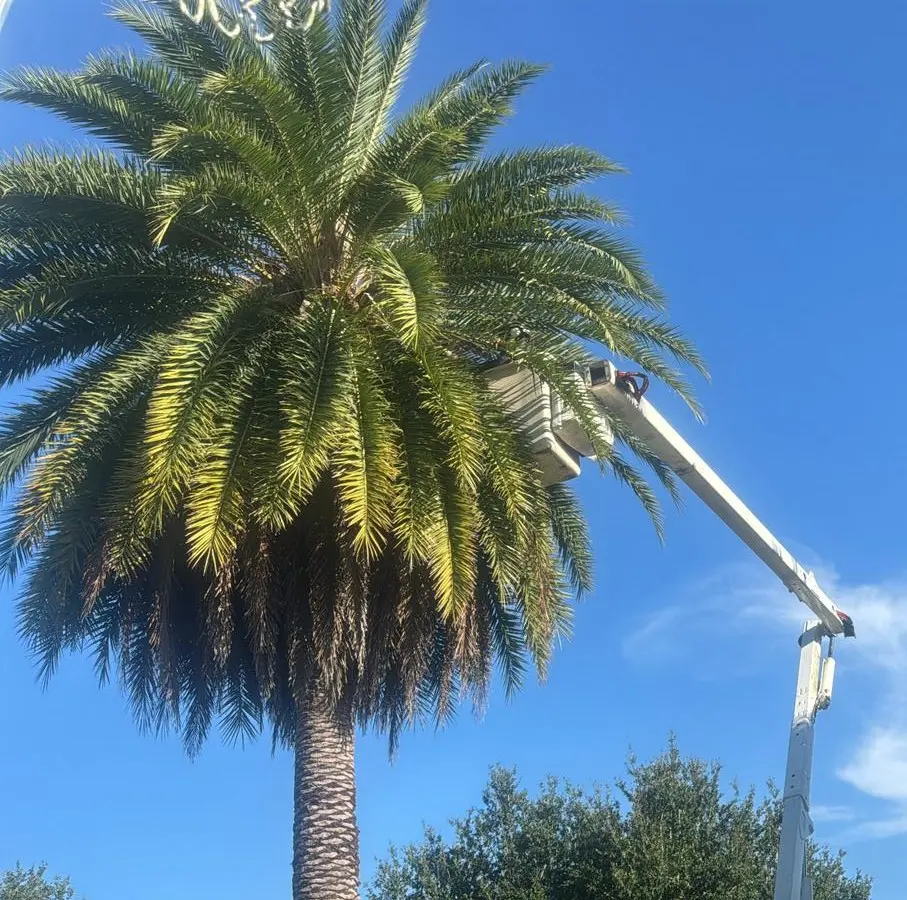
Date palms (Phoenix species) require more labor-intensive care: frond removal, fruit stalk management and boot trimming. Annual service is standard, with the timing ideally set for late spring before fruit production peaks.
Washingtonia palms — fast-growing, high frond production. Annual trimming to manage the dead frond skirt and prevent pest habitat accumulation.
What palms do not need: trimming every 3–4 months. This is one of the most common upsells from non-specialist companies in Palm Beach County, and it serves the company’s revenue more than the tree’s health. If a crew recommends trimming your palms more than once a year without a specific documented reason, ask them to explain the arboricultural basis for the frequency.
Not Sure If Your Palms Were Trimmed Correctly? A Free Assessment Takes 15 Minutes
Palm Trimming Considerations Across Palm Beach County
Palm care in Palm Beach County is influenced by local conditions that vary significantly across the county — soil composition, salt air exposure, irrigation practices and species prevalence all affect both how palms behave and what they need.
West Palm Beach properties often have mature Sabal, Royal and Coconut palms that are decades old. These trees have established root systems and generally need less intervention than younger palms — the most common mistake on these properties is over-trimming mature palms that were managing fine on their own.
Wellington and Loxahatchee properties are inland, with less salt spray exposure but often with reclaimed water irrigation that builds up soil salinity over time. Palms in these areas frequently show potassium and magnesium deficiency — yellowing that is often misread as a sign that more trimming is needed, when it’s actually a fertilization issue.
Jupiter and Palm Beach Gardens coastal properties deal with direct salt spray exposure that adds stress to palms already managing wind load. Correct trimming — not aggressive trimming — is especially important here because a stressed palm needs its full green canopy to maintain nutritional reserves.
Boca Raton, Delray Beach, and Boynton Beach HOA communities frequently have uniform palm species installed at the same time, meaning deficiency or disease that affects one palm tends to show up across the whole installation. Getting a correct diagnosis before trimming is especially useful in these settings — what looks like a trimming issue may be a fertilizer or disease management issue.
Pompano Beach properties, particularly those near the coast, are among the highest-exposure locations in the county. Correct palm trimming here — maintaining the full green canopy — provides the most practical storm preparation available short of removal.
Free
On-Site Estimates
- Pricing Guide
What Correct Palm Tree Trimming Costs in Palm Beach County
Palm trimming in Palm Beach County runs $150–$400 per palm for a correctly executed, ISA-standard job. The range reflects height, species and labor intensity — a 15-foot Sabal Palm is different work than a 45-foot Date Palm with full boot accumulation.
Some practical context on pricing:
- Jobs quoted significantly below $150 per palm often reflect crews who work fast by removing more than is correct — the “hurricane cut” approach takes less time than careful selective removal
- Jobs with very high per-palm prices should include explicit documentation of what was done and why — particularly for Date Palms, which require more skilled labor
- Multi-palm properties almost always benefit from combining the work in one visit — one mobilization, one cleanup
All estimates from ArbolPro Services are free, on-site and in writing. See our tree trimming service page for more detail on pricing and scheduling.
- Multi-palm discount available on same-day service
- Fruit and stalk removal always included
- Free written estimate before any work begins
When to Call a Professional for Palm Trimming — and What to Ask
Palm trimming is not an inherently dangerous DIY task for short palms reachable from the ground with a pole saw — if the goal is removing clearly dead lower fronds. For anything above ground level, or for palms with fruit loads, the risk profile changes significantly.
Call a professional if:
- The palm is taller than you can reach safely from the ground
- The palm is carrying a significant coconut or date fruit load that needs controlled removal
- You’re not sure what to remove and what to leave — an ISA-certified assessment takes 10 minutes and answers the question definitively
- A previous crew left the palm with very few green fronds and you want to know whether recovery is possible
- The palm shows yellowing fronds, discolored new growth or crown shaft abnormalities — these may indicate disease or deficiency that trimming alone won’t fix
When you call, ask specifically whether the crew follows the 9–3 rule and whether an ISA-certified arborist will assess the palm before work begins. A company that can’t answer those questions directly may not be following professional standards.
You can verify ISA certification independently through the ISA’s certified arborist lookup before scheduling any palm work.
ArbolPro Services provides free on-site palm assessments across Palm Beach County. Call (728) 209-4532 or request an estimate online.
- Frequently Asked Questions
Palm Tree Trimming — Frequently Asked Questions
Questions from Palm Beach County homeowners about correct palm trimming technique.
What is the 9–3 rule for trimming palm trees?
The 9–3 rule is the ISA standard for palm trimming: imagine a clock face on the palm’s crown and remove only fronds that grow below the 9 o’clock (left) and 3 o’clock (right) positions — below the horizontal midline. Green fronds above that line stay on the tree. Dead fronds, fruit stalks and accumulated boots may be removed regardless of position. This standard exists to protect the apical bud, preserve nutrient reserves and maintain the tree’s structural resilience.
How often should palm trees be trimmed in South Florida?
Most palm species in Palm Beach County need trimming once a year. Coconut palms in high-risk locations (over driveways, pools or structures) may benefit from fruit management every 6–9 months. Royal palms are largely self-cleaning and may need even less frequent professional attention. Crews that recommend trimming every 3–4 months without a documented reason are over-servicing the tree for commercial reasons.
Can I trim my own palm tree?
For short palms (under 12–15 feet) where dead lower fronds are reachable from the ground with a pole saw, DIY removal of dead fronds is generally safe if you follow the 9–3 rule. For taller palms, palms with fruit loads, or any situation where you’re unsure what to remove, a professional assessment is worth the time. Working at height on a palm crown carries specific risks, and incorrect cuts near the crown shaft can permanently damage the growing point.
What does an over-trimmed palm look like?
An over-trimmed palm has fewer than 8–10 visible green fronds, with the remaining fronds concentrated in a small tuft at the very top of the crown shaft. The trunk may be entirely bare of fronds from the bottom up to a small cluster at the top. This is the result of a hurricane cut. Over-trimmed palms look stressed, produce smaller and fewer new fronds in subsequent growth cycles, and often develop visible nutritional deficiency symptoms within one season.
How do I know if my palm was trimmed correctly?
After a correct trim, a palm should look maintained but full — a complete green canopy visible above the horizontal midline, with the lower dead fronds removed and the trunk clean. The crown shaft should be undisturbed. If you can count fewer than 8–10 green fronds remaining on the palm after service, or if the trunk is entirely bare up to a small crown tuft, too much was removed. An ISA-certified arborist can assess a previously trimmed palm and tell you whether the tree is recovering normally.
The Bottom Line
Knowing how to trim a palm tree correctly in South Florida comes down to one practical standard: the 9–3 rule. Remove fronds below the horizontal line, fruit stalks and dead material. Leave everything green above the line. Don’t strip the crown, don’t cut near the crown shaft, and don’t let anyone convince you that more removal means more storm protection.
Palm Beach County properties from West Palm Beach to Boca Raton benefit from annual, correctly executed palm maintenance — not aggressive pre-season stripping. The difference between a well-maintained palm and an over-trimmed one is visible within one growing season, and the long-term health consequences can last for years.
If you’re not sure whether your palms were trimmed correctly or need attention before this hurricane season, ArbolPro Services offers free on-site assessments from our ISA-certified arborists across Palm Beach County.
- Get Started
Need a Free Quote in Palm Beach County?
Need a free quote in Palm Beach County? Contact ArbolPro Services today or call (728) 209-4532. We serve West Palm Beach, Boca Raton, Wellington, Jupiter, Palm Beach Gardens, Delray Beach, Boynton Beach, and Pompano Beach.
Free estimates Mon–Sat · ISA-Certified Arborists · No Hurricane Cuts
✓ Licensed & Insured ✓ 9–3 Rule ✓ Written Quote ✓ Palm Beach County